Monkeys of Panama: The Species You'll See on Monkey Island
See prices From 32 EUR · Free cancellation available
Contents
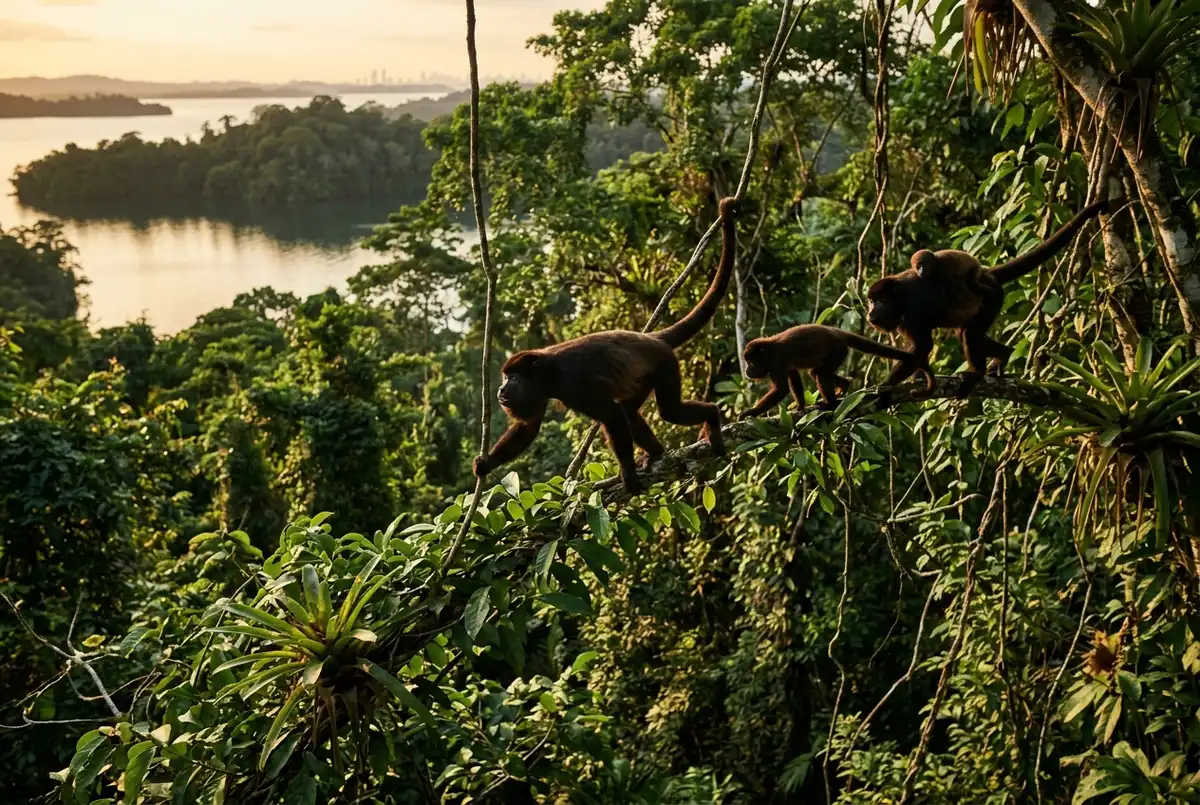
Monkeys in Panama are real, wild, and a lot easier to find than most first-time visitors expect. You do not need a week-long jungle expedition. The country’s rainforests hold several native species, and a short boat ride out of Panama City puts you close enough to watch them move through the canopy on their own schedule. I have looked at every tour that runs this route, and the honest answer is that one specific stretch of water does the job better than anywhere else near the city.
Yes. Panama’s position as a land bridge between North and South America gives it one of the richest primate populations in Central America, and several species live wild in the forests around the Panama Canal watershed, not in a zoo or sanctuary. I would not plan a Panama trip around monkeys the way you might plan an African safari around lions, but if seeing them matters to you, the country delivers without much effort.
The monkeys you are most likely to encounter near Panama City are not shy, elusive animals hiding deep in untouched jungle. Decades of canal construction, lake flooding and boat traffic have left them living on islands and forest edges that are genuinely easy to reach by water. That is the whole reason Monkey Island tours exist as a category of their own.
Check prices & dates
Ready to visit?
Book your tickets in advance: popular time slots sell out.
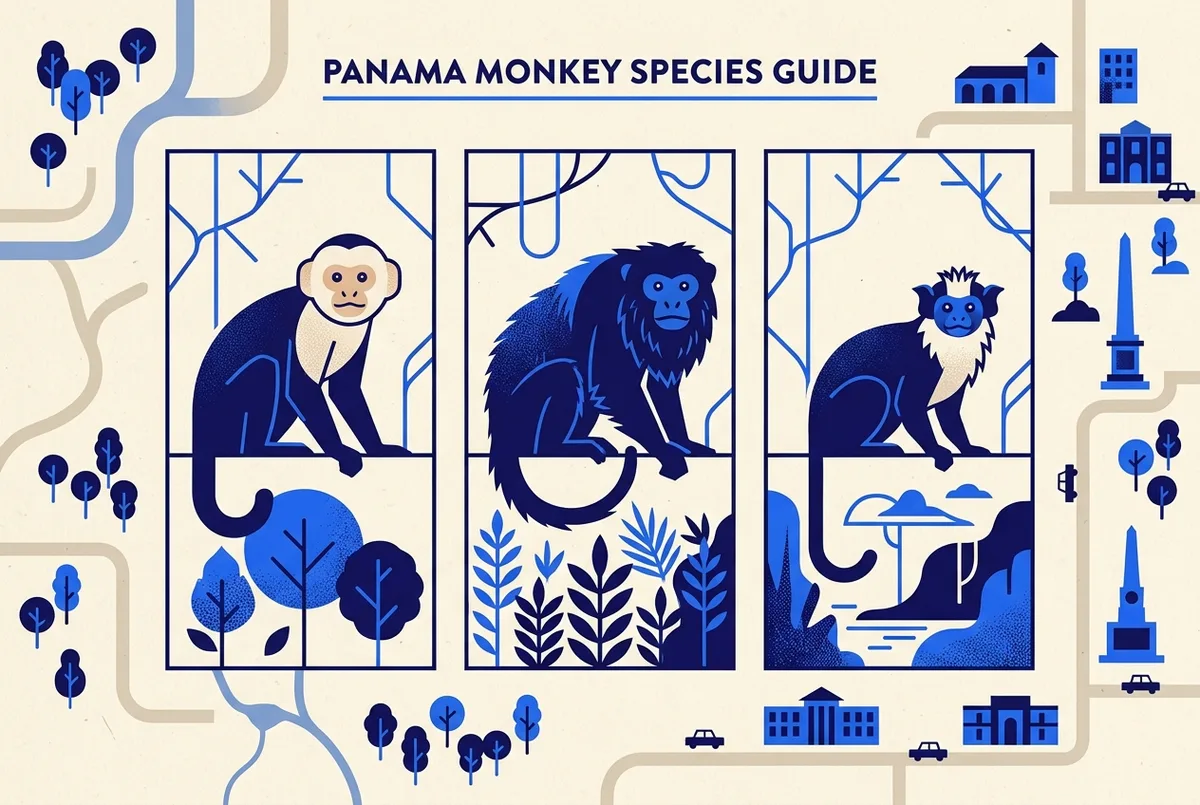
Three species show up consistently on the boat tours that visit Gatun Lake’s islands: white-faced capuchins, mantled howler monkeys, and Geoffroy’s tamarins. Each one looks and behaves differently enough that you can usually tell them apart within a few minutes of watching.
White-faced capuchins are the most active and curious of the three. They move fast through the branches in loose troops and will often come close to a boat that holds still, since they have learned that boats sometimes mean food, even though guides are instructed not to feed them. Mantled howlers are bigger, slower, and far more often heard than seen at a distance, their deep roaring call carrying well over a mile across open water. Geoffroy’s tamarins are the smallest of the group, quick and easy to miss if you are not looking carefully, with a mix of black, white and reddish fur. My honest take is that if you only remember one name before the trip, make it capuchin, since they are the species guides spot most reliably and the one most tours are built around.
Panama is also home to other primates elsewhere in the country, including Geoffroy’s spider monkeys and Panamanian night monkeys, but these are not the species you should expect to see on a standard Monkey Island boat tour. I would not go in expecting a fourth or fifth species to show up, since setting that expectation only sets you up for disappointment on a trip that is genuinely good at delivering the three it promises.
Why is Gatun Lake the easiest place to see them?
Gatun Lake was created in 1913 when the Panama Canal’s builders dammed the Chagres River, flooding a wide valley to create the water level the canal needed. The flooding left dozens of hilltops standing above the new waterline as isolated forest islands, and the monkey populations that were already living on those hills got cut off from the mainland forest. The short version matters here: those monkeys never had anywhere else to go, so they stayed, bred, and are still there a century later. I go into the full story just below.
That isolation is actually good news for anyone hoping to see them. A troop that cannot wander off into a thousand square miles of unbroken jungle is a troop a boat can realistically find. Guides who run this route daily know roughly where each troop tends to be at a given time of day, which is why sightings on these tours are consistent rather than a matter of luck.
I would also point out that the lake itself does a lot of the work here. Water is a natural barrier that keeps troops from drifting far between visits, so the same general stretches of shoreline tend to produce sightings week after week, season after season. That consistency is exactly what separates a reliable half-day tour from the kind of wildlife trip where you might spend hours and see nothing. Dry season mornings, roughly January through April, tend to be the easiest for spotting, since lower humidity keeps monkeys more active earlier in the day, but I have heard from guides that sightings happen reliably in the wetter months too, just sometimes a little later in the morning once the rain clears.
How did the monkeys end up isolated on these islands?
I find this detail genuinely interesting because it reframes the whole visit. You are not looking at an artificial wildlife park. You are looking at a population shaped by one of the biggest engineering projects of the 20th century, which is a more unusual story than most wildlife-watching trips can offer.
What’s the difference between Monkey Island in Panama and Monkey Island in Bocas del Toro?
If your trip is centered on Panama City and the canal, you want the Gatun Lake islands. If you are island-hopping around Bocas del Toro, you are almost certainly thinking of the other one. Confusing the two is an easy way to book the wrong excursion in the wrong region.
I would not assume the two locations share the same species mix, either. The Gatun Lake islands are well documented through the tours that run there daily, with capuchins, howlers and tamarins confirmed on nearly every departure. The Bocas del Toro location is covered mostly through word of mouth and local boat operators rather than consistent published sources, so if you end up booking that side of the country, ask the operator directly what you can expect to see rather than assuming it matches what I describe here.
Is this the same place as the video game, or a Reddit meme?
No, and this confusion comes up often enough that it deserves its own answer. The real Gatun Lake islands have nothing to do with the LucasArts adventure game of a similar name, and the “monkey island” threads you might find on Reddit are usually about the Panama location, Bocas del Toro, or occasionally a joke thread that has nothing to do with Panama at all. I sort through all of this directly on the dedicated page explaining what Monkey Island actually is, since a search this ambiguous deserves a clear, single answer rather than a guess.
My honest advice is that if a guaranteed sighting matters more to you than saving money, stick with the boat tours to the islands. Land-based wildlife watching in a national park is genuinely rewarding but far less predictable, since you are relying on a chance encounter rather than a guide who knows exactly where a troop tends to gather.
What should you look for to tell the species apart?
Is it safe to be close to wild monkeys on the boat?
Yes, for the way these tours are run. Boats keep a respectful distance from the shoreline rather than docking on the islands themselves, and guides do not allow feeding, which keeps the animals genuinely wild rather than habituated to handouts. The monkeys you see are behaving naturally, not performing for a camera.
That said, I would not assume every combo tour works the same way, since a few bundle in other activities, like a sloth sanctuary stop, that do involve closer contact with different animals under different rules. If that distinction matters to you, the swimming and safety page is worth reading before you book, since it covers exactly what is and is not hands-on across the lineup.
This overlap is actually one of the best reasons to book a Gatun Lake tour over a land-based canal viewpoint. You get the monkeys and a decent chance of watching a large ship pass, in the same few hours, instead of treating the canal and the wildlife as two separate trips.
How does getting there fit into a Panama City itinerary?
Most visitors slot this in as a half-day excursion, which leaves the rest of the day free for Casco Viejo, the Panama Canal visitor centers, or just recovering from the heat. I would not try to stack a Monkey Island boat trip on the same morning as a long Casco Viejo walking tour, since the early pickup times and the midday heat on the water make a packed schedule feel rushed rather than enjoyable. Give the morning to the monkeys, and save other sightseeing for the afternoon or a separate day.
Are Panama’s monkeys protected, and should you worry about conservation?
All three species are protected under Panamanian law, and hunting or capturing them is illegal. None of the three is currently classed as critically endangered, but habitat loss elsewhere in Panama makes the stable, protected populations around the canal watershed genuinely valuable from a conservation standpoint, not just a tourism one.
I would push back gently on the instinct to feel bad about visiting. Responsible boat tours that keep their distance and ban feeding are a far better outcome for these animals than the alternative, which is a shrinking, unprotected habitat with no tourism revenue to justify keeping it intact. The islands being a draw for visitors is part of why Panama’s canal authority has reason to keep the surrounding forest standing rather than clearing it for something else.
That is not an excuse to be careless on the water, though. I would avoid any operator who lets guests bring food along, lands a boat directly on the islands, or encourages close physical contact. None of that is necessary for a good sighting, and a guide who insists on it is prioritizing a dramatic photo over the animals’ long-term welfare. If you want a quick way to judge an operator before booking, read the included and not-included lists on the tour pages closely. A listing that never mentions feeding, landing, or handling as part of the itinerary is describing the kind of hands-off encounter I would actually recommend.
FAQ
Are there monkeys in Panama City itself?
Not reliably within the built-up city center. The monkeys live in the forested areas and islands around the canal watershed, roughly 30 to 45 minutes outside downtown Panama City, not in city parks or urban green spaces.
What is the smallest monkey species in Panama?
Geoffroy’s tamarin is the smallest of the three species commonly seen on Monkey Island tours, noticeably smaller than both the capuchins and the howlers.
Can I see monkeys in Panama without booking a tour?
Technically yes if you arrange your own boat and guide, but I would not recommend it for a first visit. The islands are not reachable by road, and without local knowledge of where troops tend to gather, a self-arranged trip is far less likely to produce a sighting.
Do the monkeys live on the islands year-round?
Yes, these are resident populations that have lived on the islands since the lake was formed, not migratory animals that disappear for part of the year.
Is Monkey Island the official name of the place?
No, it is the common nickname tour operators and travelers use for several forested islands in Gatun Lake. There is no single official landmark with that exact name on a Panamanian map.