Wildlife Spotting Tips for Your Monkey Island Boat Tour
See prices From 32 EUR · Free cancellation available
Contents
Wildlife spotting tips for Monkey Island mostly come down to patience and positioning rather than expensive gear. You do not need a professional camera rig or years of birding experience to come away with a good sighting. I have gone through what every boat tour to these islands actually provides and compared it with the small habits that separate a visitor who sees three species from one who only half-notices a single distant shape in the trees.
The honest truth is that the monkeys are not performing on a schedule, and no guide can promise an exact moment of contact. What a guide can do, and what you can do yourself, is stack the odds in your favor before the boat even leaves the dock.
Where should you sit on the boat for the best sightings?
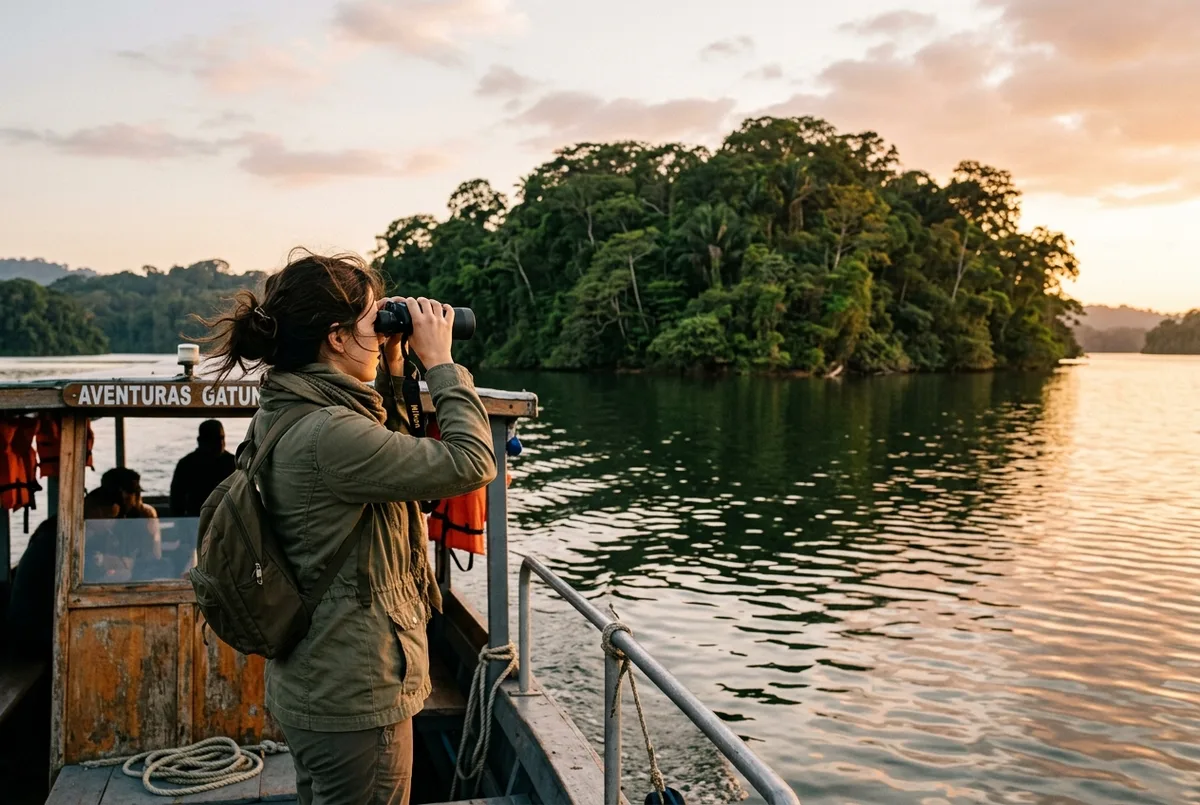
I would pick a seat along the side rail rather than the center aisle if you have any choice at all. Most of these riverboats and safari trucks give you an open, unobstructed view to one side, and sightings tend to happen along the shoreline rather than in open water, so a side seat gets you closer to the action with fewer heads in the way of your shot.
If you are traveling with a group and someone has to take a center or rear seat, I would rotate who gets the prime spot partway through the ride rather than letting one person hold it the whole time. Guides also tend to slow the boat and angle it toward whichever side has the best view once a sighting starts, so even a less ideal starting seat usually works out by the time the boat reaches the islands.
Check prices & dates
Ready to visit?
Book your tickets in advance: popular time slots sell out.
When during the tour should you start paying attention?
From the moment you board, not just once you reach the islands. On the standard Gatun Lake boat tour, howler monkeys sometimes show up along the riverbank well before the boat reaches the main viewing area, and I would hate for anyone to miss an early sighting because they assumed the real action only starts at the destination.
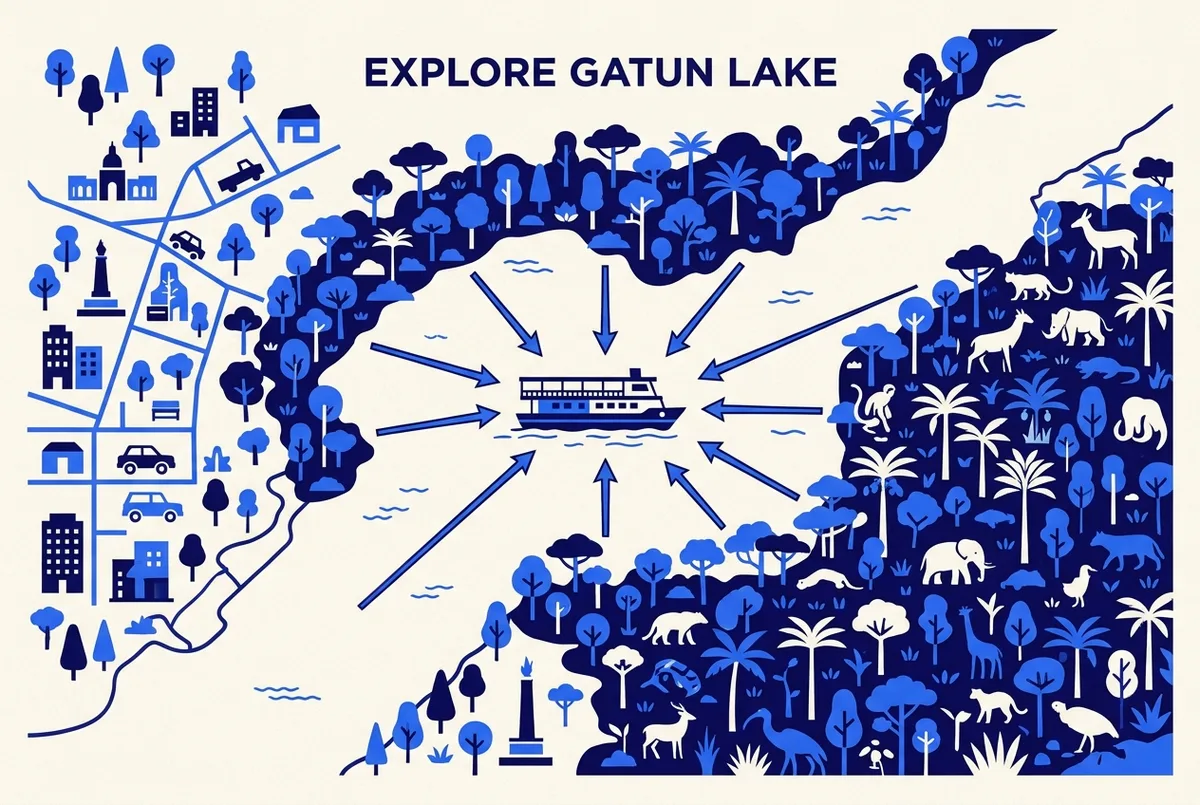
My honest take is that the whole river crossing is part of the wildlife window, not just the 20 to 30 minutes the boat spends holding position at the islands themselves. Treat the entire ride as prime viewing time and you will see more than someone who only looks up once the guide announces arrival. I go deeper on where exactly these boats tend to find monkeys and other wildlife around the lake, which is worth a read if you want to picture the route before you go.
Do you need your own binoculars, or does the tour provide them?
Several tours, including the Panama Canal Monkey Island wildlife safari, include binoculars and a spotting scope as part of the listed price, so you are not required to bring your own. I would still pack a compact pair if you own one, since a shared pair of tour binoculars has to go around a full boat of guests, and having your own means you are not waiting for your turn right when a troop appears.
I would not spend money on a new pair specifically for this trip unless you are already a serious birder or photographer. The scope most tours provide is usually enough for a clear view of the monkeys, and your own eyes plus a decent zoom lens will cover most of what you want to capture.
What should you listen for, not just look for?
Mantled howler monkeys are much easier to hear than to see. Their deep, rolling call carries well over a mile across open water, and it is genuinely one of the loudest animal sounds in the Americas for the animal’s size. I cover exactly what each species sounds and looks like on the identification page, but as a quick rule, a loud roar from somewhere high in the canopy almost always means howler, even before you spot any movement.
I would tell any first-timer to stop scanning visually for a second whenever you hear that call and instead trace the sound to its source. Guides do this constantly, and it is honestly one of the fastest ways to find an animal that would otherwise stay hidden behind leaves for the whole ride.
What camera settings actually work for fast-moving monkeys?
White-faced capuchins move fast and low through the branches, so a faster shutter speed and a willingness to fire off several shots in a row beats trying to time one perfect frame. Howlers, by contrast, tend to sit still for longer stretches high in the canopy, which makes them far easier to photograph well once you locate one.
I would not stress over getting a clean shot of every species on every outing. Geoffroy’s tamarins in particular are small, quick and often partly hidden, so I would treat a good tamarin photo as a bonus rather than something to expect, and just enjoy spotting one with your own eyes if the photo does not come together.
What should you wear or bring for the boat itself?
Comfortable clothes, a hat, sunscreen, and insect repellent applied before you leave the hotel rather than after you reach the dock, since mosquitoes tend to be most active right at the boarding point. Several operators mention rain ponchos being provided for the open-air sections, which is worth knowing if the forecast looks uncertain, since a sudden shower should not derail your whole viewing window.
I would also keep valuables in a secure, zipped bag rather than loose in a pocket. Boats on these tours are open-sided, and reaching for a dropped phone or sunglasses is a worse way to spend your limited viewing time than just keeping things secured from the start.
How quiet do you actually need to be?
Quieter than most visitors expect, especially once the boat slows near the islands. Loud talking or sudden movement on deck can push a curious troop back into deeper cover before everyone on the boat gets a good look. I would save excited reactions for after a sighting rather than during one, since a gasp or a shout the instant a capuchin appears is often exactly what sends it retreating.
My honest advice is to let the guide set the pace once the boat reaches the viewing area. They know which approach keeps a troop comfortable enough to stay visible, and following their lead on volume and movement tends to produce a longer, better sighting than treating the stop like a photo-ops free-for-all.
Does the time of year change what you’ll see?
Somewhat. Dry season mornings, roughly January through April, tend to be the easiest for spotting, since lower humidity keeps the monkeys more active earlier in the day. I have heard from guides that sightings still happen reliably in the wetter months, just sometimes a little later in the morning once the rain clears and the troops come out to dry off and feed.
I would not pick your Panama trip dates around monkey sightings alone, since the boat tours run and deliver sightings across the whole year. If you are still deciding whether this specific hilltop isolation story is even the Monkey Island you are looking for, the origin page explaining how the monkeys ended up there in the first place fills in that background.
Should you avoid feeding or trying to attract the monkeys?
Yes, firmly. Guides on every tour I have looked at are instructed not to feed the monkeys, and you should follow that same rule even if a curious capuchin drifts close to the boat. Feeding wild monkeys makes them dependent on handouts and more aggressive toward future boats, which is bad for the animals and eventually bad for the whole category of tour.
I would treat a monkey coming close on its own as the reward for patience, not an invitation to toss food or reach out. The best operators keep this a hands-off, genuinely wild encounter, and that is exactly the kind of sighting worth protecting by not interfering with it yourself.
Staying in the boat is not just a safety rule, either. Getting closer by swimming would almost certainly scare off the exact wildlife you came to see, so the boat’s distance is doing you a favor, not holding you back.
What’s the single habit that makes the biggest difference?
If I had to pick one, it would be this: keep looking even during the parts of the ride that feel like transit rather than the main event. The Gatun Lake boat tour, the safari truck combo, and every other Monkey Island departure share the same basic wildlife stop, so the difference between a great outing and an average one usually comes down to attention span, not which specific tour you booked.
I would rather a first-time visitor overprepare on patience and underprepare on gear than the other way around. Binoculars help, but staying alert for the full ride is what actually produces sightings. None of these habits require booking anything fancy either; they work whether you end up booking a Panama Monkey Island tour that is the plain boat ride or one of the longer combos.
FAQ
Do I need to bring my own binoculars on a Monkey Island tour?
Not necessarily. Several tours provide binoculars and a spotting scope as part of the included price, though bringing your own means you are not sharing a single pair across the whole boat.
What time of day gives the best wildlife sightings?
Morning departures during the dry season, roughly January through April, tend to be the most reliable, though guides report consistent sightings across the rest of the year as well.
Is it safe to try to attract a monkey closer to the boat?
No. Feeding or encouraging contact is discouraged on every tour, since it makes wild monkeys dependent on handouts and can make them more aggressive toward future visitors.
Should I worry about seasickness affecting my ability to spot wildlife?
If you are prone to seasickness, sit toward the middle of the boat where motion is less pronounced, though most of these rides stay close to shore in relatively calm lake water.
Can I see wildlife from the boat before reaching the actual islands?
Yes. Howler monkeys and birds are sometimes visible along the riverbank during the crossing itself, so it is worth staying attentive well before the boat reaches the main viewing stop.
Panama Canal Monkey Island Wildlife SafariFrom €32