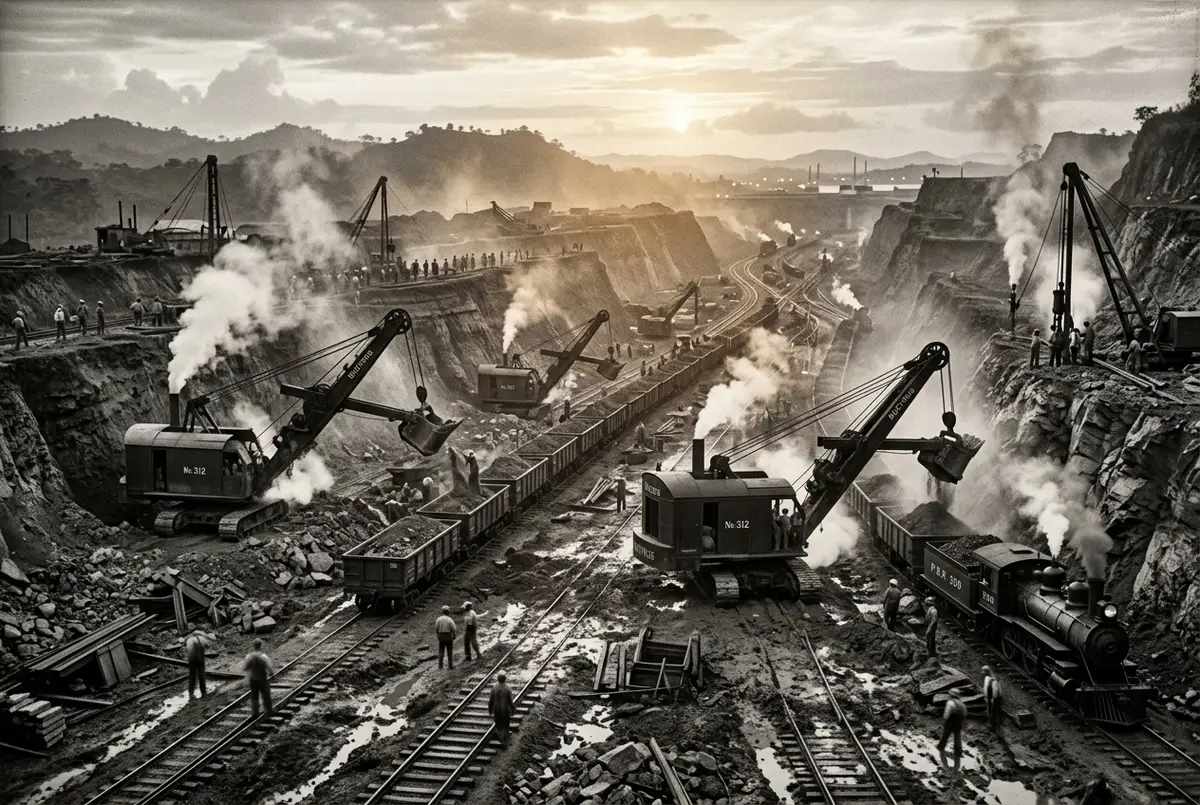
Panama canal history facts worth knowing go well beyond the standard trivia about ships and oceans. The canal opened in 1914 after roughly a decade of construction, following a French attempt in the 1880s that collapsed under disease and engineering failures. I think the most useful fact for anyone planning a Panama City trip is the one most guidebooks bury: building the canal flooded an entire valley, and that flooding is the direct reason Monkey Island exists as a destination today.
That connection is worth understanding before you book anything. If you want the fuller picture of how the canal and Monkey Island fit together as one system rather than two separate attractions, that page lays out the whole relationship.
Who actually built the Panama Canal, and when?
The United States completed construction between 1904 and 1914, taking over after a French company led by Ferdinand de Lepseps abandoned a sea-level canal attempt in the 1880s, defeated mainly by yellow fever, malaria and the sheer scale of digging through the continental divide. The full engineering and political story is worth a proper read if the history genuinely interests you beyond this summary. I would call the French failure the more important half of this story for most visitors, since it explains why the eventual American design, using locks and a dammed lake rather than a flat sea-level channel, was such a deliberate change in approach.
Why did the builders choose locks instead of a flat sea-level channel?
A sea-level canal would have meant digging the entire 80 kilometer route to ocean depth, an undertaking that had already defeated the French. Locks let engineers lift ships up over Panama’s continental divide using a series of chambers, then lower them back down on the other side, which meant far less excavation overall. Panama canal facts like this one explain why the canal looks the way it does today: three sets of locks, Gatun, Pedro Miguel and Miraflores, doing the heavy lifting instead of a single uninterrupted waterway.
How did building the canal create Gatun Lake?
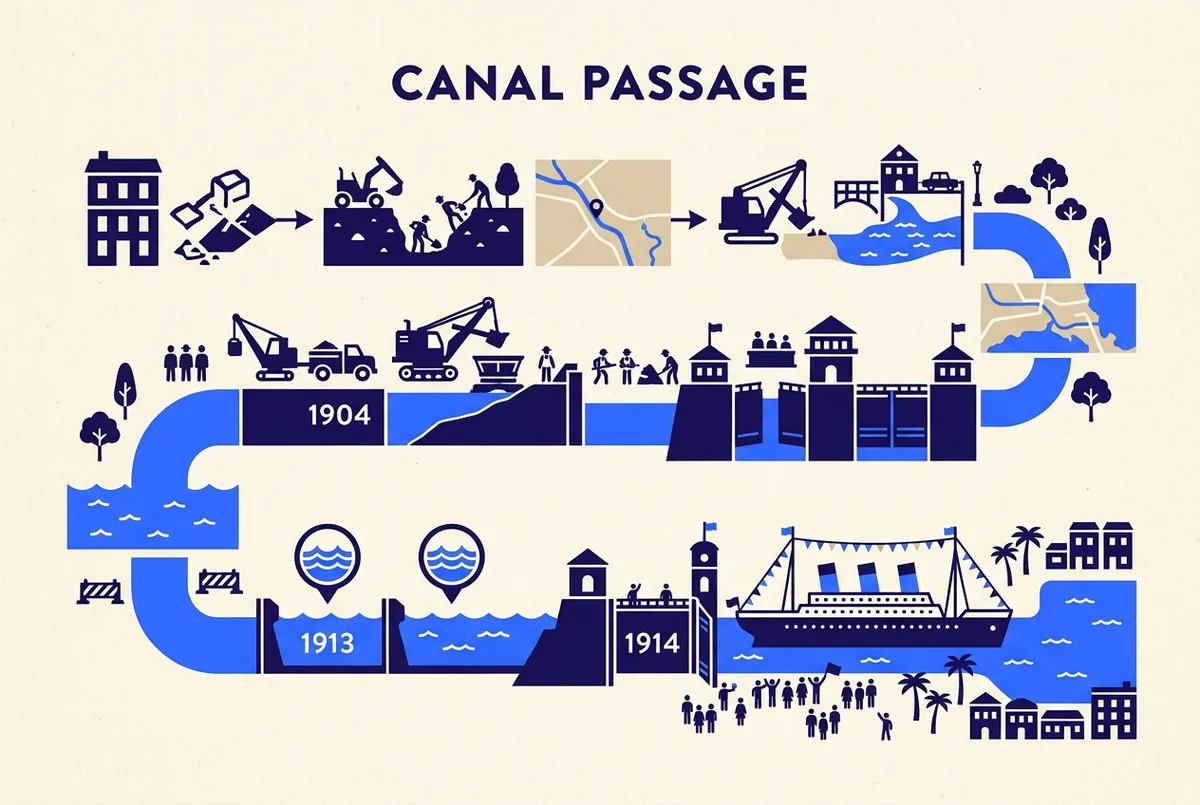
Engineers dammed the Chagres River specifically to create a large, calm body of water that ships could cross between the lock systems rather than digging a channel the whole way across. That decision flooded a wide valley in 1913, and the hilltops that had been part of the surrounding forest became isolated islands as the water rose around them. How many separate lock systems make up the canal is the mechanical half of this same story, but the flooding itself is the piece that matters most for anyone researching Monkey Island specifically.
Is Monkey Island actually a direct result of that 1913 flooding?
Yes, and I think this is the single most underrated fact in the whole canal story for a modern visitor. The monkeys living on the islands today did not relocate there on their own. Their ancestors were simply stranded on hilltops when the surrounding lower ground disappeared under Gatun Lake, and the population has lived there ever since, cut off from the mainland forest by water rather than by choice. That is a genuinely different origin story than most wildlife attractions can claim.
How long did the canal actually take to build under US control?
About ten years, from 1904 to 1914, which included not just excavation but also a major public health campaign against mosquito-borne disease that had crippled the earlier French effort. I would not undersell that health campaign when people ask about canal history, since draining swamps and controlling mosquito breeding grounds around the construction zone arguably mattered as much to the project’s success as the engineering itself.
What role did disease play in the earlier French failure?
A massive one. Yellow fever and malaria killed thousands of workers during the French attempt in the 1880s, and the true cause of those diseases was not even understood at the time. Panama canal construction history really has two chapters: the French chapter, defeated largely by disease and an overly ambitious sea-level design, and the American chapter, which succeeded partly because it tackled mosquito control as seriously as it tackled digging.
Did the flooding displace people as well as wildlife?
Yes, communities living in the Chagres valley had to relocate before the flooding reached its final level, since the rising water covered towns along with the forest. I would not gloss over this part of the history. The canal’s construction reshaped an entire region’s human geography, not just its landscape, and that displacement is as much a part of the honest history as the engineering achievement most summaries focus on.
How big is Gatun Lake compared to the rest of the canal?
Gatun Lake makes up roughly a third of the canal’s total length, which surprises a lot of first-time visitors who picture the canal as mostly a dug channel. In reality, ships spend a significant stretch of their transit simply crossing open lake water between the lock systems on either end. I would keep this scale in mind the next time someone describes “crossing the canal,” since for a large part of that crossing, you are really crossing a flooded river valley rather than a trench.
Why does this history matter if you’re mainly here for the monkeys?
Because it explains why the monkeys are there at all, and why a wildlife tour and a piece of global infrastructure history end up sharing the same boat ride. I would tell anyone booking a Monkey Island tour that knowing this background adds real context to the trip rather than just being trivia for a guide to recite. You are not just watching animals. You are looking at the direct, century-old consequence of one of the largest engineering projects of its era.
Has the canal changed much since it opened in 1914?
Significantly, yes. The biggest change came in 2016, when a new set of larger locks opened alongside the original three systems, letting much bigger ships, known as neopanamax vessels, transit the canal for the first time. I would mention this if you are watching ships from Miraflores specifically, since the original locks you see there still handle plenty of traffic, but they are no longer the only route through, and the newer locks sit at a separate site you will not pass on a standard Monkey Island tour.
Is the canal still owned and operated by the United States today?
No, and this is a fact a lot of visitors get wrong. Control passed fully to Panama in 1999, under a treaty signed in 1977, and the canal is now run by the Panama Canal Authority, an autonomous agency of the Panamanian government. I would call this transfer one of the more significant moments in the country’s modern history, not just a footnote to the engineering story, since the canal remains one of Panama’s largest sources of national revenue today.
What’s the one fact most visitors get wrong about the canal’s history?
That it is a sea-level channel like the Suez Canal. It is not. The lock system and the dammed lake are what make the Panama Canal fundamentally different, and I think that single misunderstanding is behind a lot of the confusion people have about why Gatun Lake, and by extension Monkey Island, exist as part of the canal at all rather than as some separate nearby lake.
My honest recommendation is to treat this history as the backstory to your trip rather than homework before it. A Panama Monkey Island tour out of the city puts you on the exact water this flooding created, which makes the history land a lot more vividly in person than it ever does on a page like this one.
FAQ
When did the Panama Canal open?
The canal opened in 1914, after roughly a decade of US-led construction that followed a failed French attempt in the 1880s.
What created Gatun Lake?
Engineers dammed the Chagres River in 1913, flooding a valley to create a lake ships could cross between the canal’s lock systems.
Is Monkey Island connected to the canal’s construction history?
Yes, the monkeys living on its islands today descend from populations stranded on hilltops when the 1913 flooding isolated them from the mainland.
Why did builders use locks instead of digging a flat channel?
Locks let ships be lifted and lowered over Panama’s continental divide, avoiding the far larger excavation a sea-level canal would have required.
Did disease affect the canal’s construction?
Yes, yellow fever and malaria devastated the earlier French effort; US-led construction succeeded partly through a serious mosquito-control campaign.